
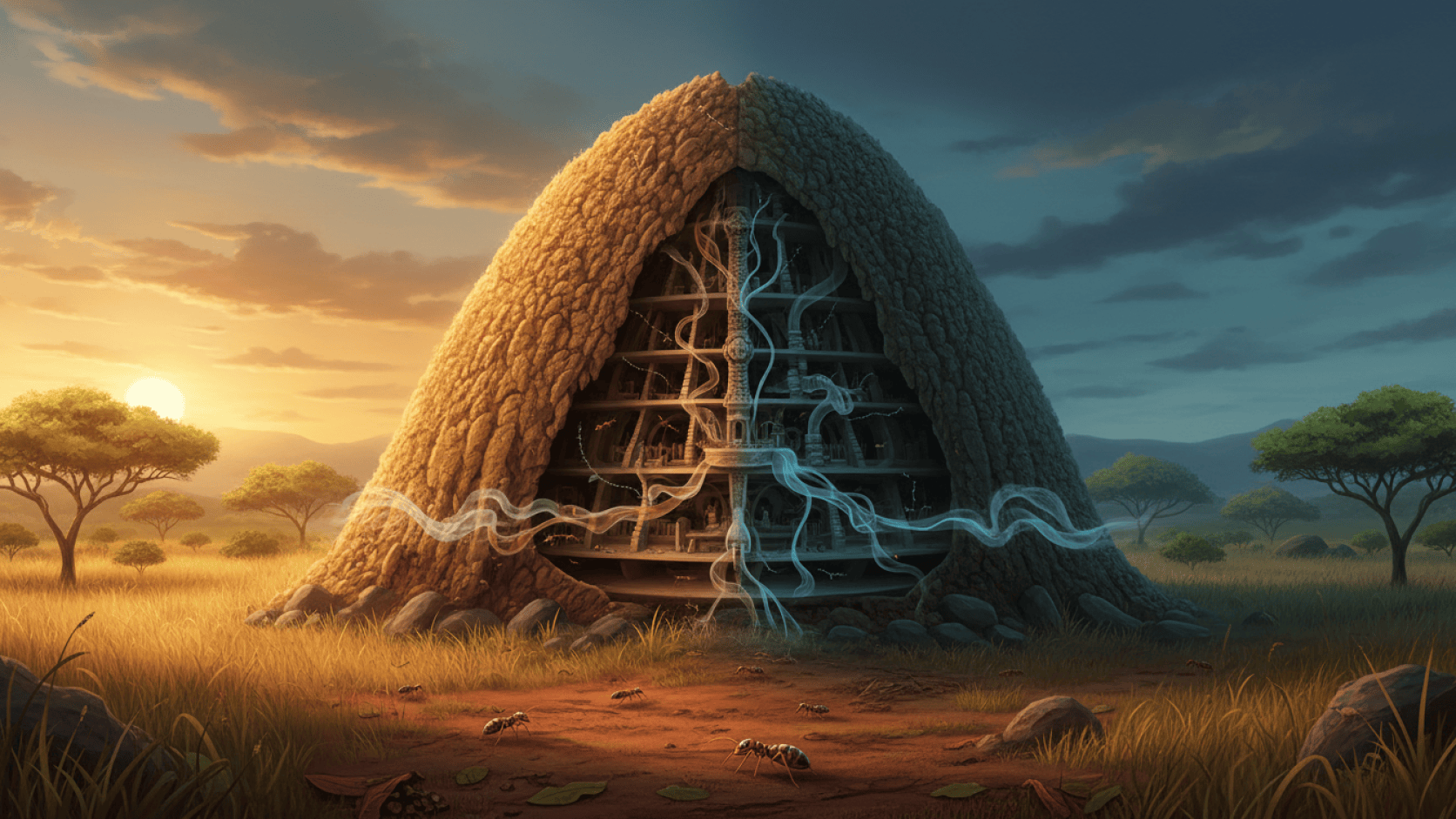
Some termite mounds use daily temperature changes to move air through a built-in ventilation system. The insects make enormous structures with internal passages, and the warming and cooling of those passages help circulate gas.
It’s a natural ventilation trick built by creatures small enough to fit on a fingernail.
The visible mound isn’t simply a giant ant hill
Certain fungus-growing termite species live in underground nests while building large, mostly uninhabited mounds above them. The mound contains channels and chimneys linked to conditions in the colony below.
The termites need to manage heat, humidity and the buildup of carbon dioxide. The structure’s design helps them do that.
Scientists measured the air rather than guessing
A 2015 PNAS study examined mounds built by Odontotermes obesus. Researchers measured airflow inside the structures and found that changes in outside temperature over the course of a day helped drive circulation.
Thin outer passages warmed more quickly than deeper central chimneys during the day. That temperature difference produced a circulation pattern. At night, the flow direction could reverse as the mound cooled unevenly.
A daily breathing cycle
The researchers described a kind of natural thermal engine. Air can circulate through the mound because different parts warm and cool at different rates.
This is not a steady outward breeze. In the mounds the team studied, carbon dioxide concentrations could reach around 4 to 5 percent near the center during the day. When airflow reversed at night, it carried gas toward the porous outer walls, where it could escape by diffusion, as Harvard’s account of the research explains.
It doesn’t mean the termites operate mechanical fans or intentionally adjust the weather. They construct a system whose physical shape takes advantage of predictable temperature swings.
Not every termite mound works alike
The full published study investigated a particular mound-building species and measured a particular airflow mechanism. Different termite species build different structures in different climates.
A separate 2026 InterPore Journal study examined non-fungus-farming termite mounds using X-ray tomography and computer simulations. In those mounds, outer walls strongly constrained airflow and gas diffusion, while the layout of the interior passages also mattered. Those were different species and methods from the 2015 day-and-night airflow measurements, not proof that every mound ventilates the same way.
Scientists are interested because such biological designs can inspire questions about passive building ventilation, even if a termite mound cannot simply be copied into an office blueprint.
Architecture without a foreman
No individual termite carries the whole construction plan in its head. Many small actions build a structure with large-scale environmental effects.
For another animal-made structure with an unexpected purpose, see how male pufferfish build geometric circles in the sand to attract mates. Their designs serve a different purpose from a termite mound, but both are striking examples of animals shaping their surroundings.
For these termites, the daily rise and fall of temperature helps keep the colony breathing.