
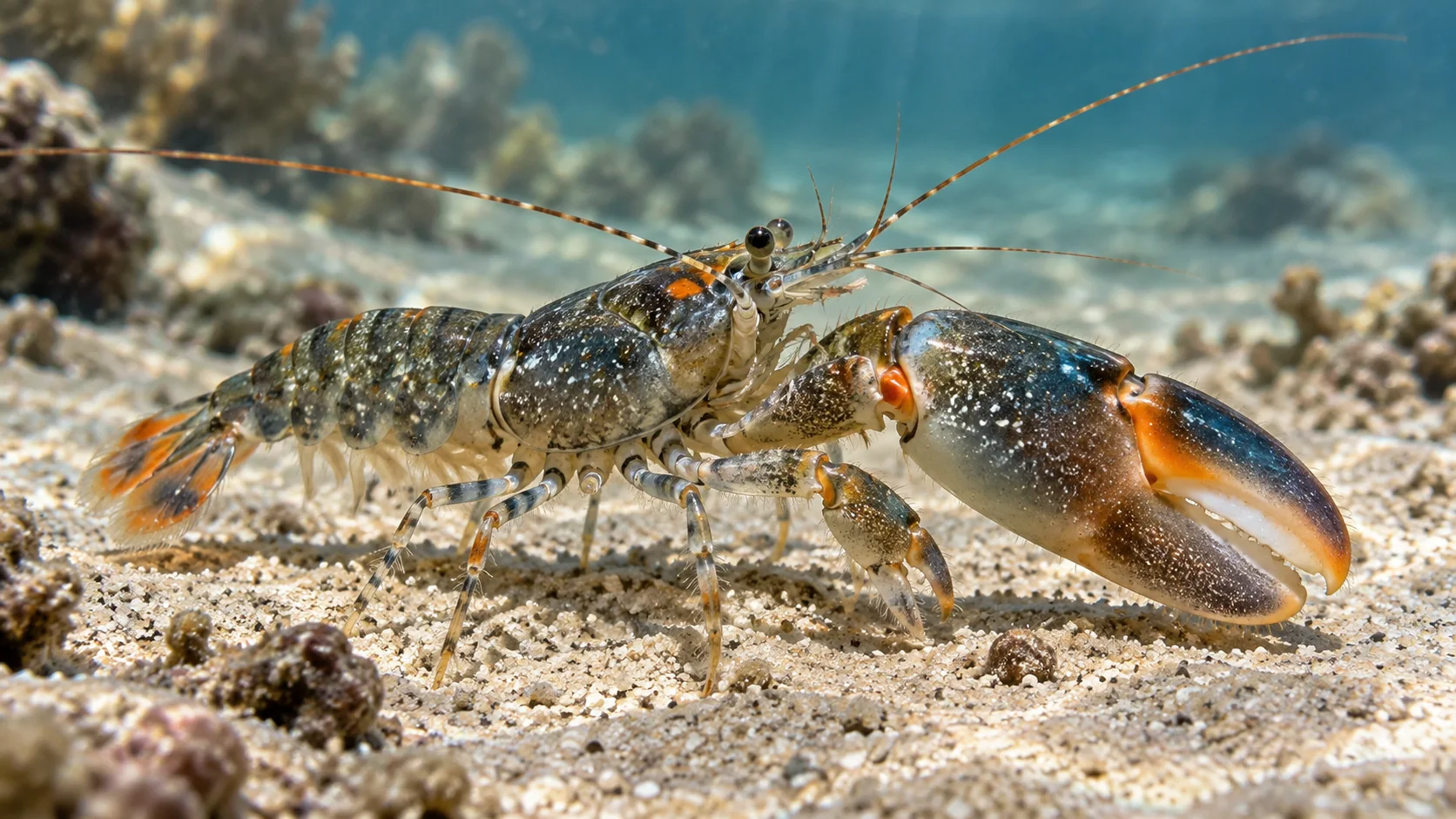
A pistol shrimp can produce a tiny flash of light by snapping one claw. The shrimp does not glow, and the claw is not an underwater lightbulb. The flash comes from a bubble that forms and collapses in the surrounding water.
There is also a startling amount of noise involved. When a snapping shrimp fires that claw, it can produce a sharp underwater crack. It took high-speed cameras and sound measurements to reveal where the sound really comes from.
The loud snap doesn’t come from two claw surfaces hitting
Researchers studying the snapping shrimp Alpheus heterochaelis reported an elegant trick in a 2000 paper in Science. Rapid closure of its specialized claw sends out a high-speed jet of water. The changing pressure creates a cavitation bubble, which then implodes.
In the experiments, the strongest sound lined up with the bubble’s collapse, not with the instant the claw snapped shut. Researchers combined high-speed images with underwater microphone measurements to establish that timing.
Think of cavitation as the water briefly forming a vapor-filled pocket because the local pressure drops. When the conditions change, the pocket collapses violently. It is not quite the same thing as a shrimp simply clapping two hard objects together.
Then scientists discovered a flash
A follow-up 2001 report in Nature by researchers including Detlef Lohse and Michel Versluis documented something odder still: a short burst of light from the collapsing bubble.
The team gave the phenomenon the magnificent name “shrimpoluminescence.” The light was evidence of remarkably extreme conditions inside the collapsing bubble. On the basis of the flash, the researchers inferred momentary temperatures of at least about 5,000 kelvin. That is a physical estimate for the tiny bubble at collapse, not a thermometer reading of the shrimp’s body or the surrounding sea.
Nor does the finding mean a passing diver could watch shrimp blinking like Christmas lights. The study describes a very brief flash detected during carefully controlled measurements, not a sustained glow or a visible signaling display.
Why the bubble matters more than the flash
The sound and collapsing bubble are not just laboratory curiosities. In the 2000 experiments, the researchers described snaps that can stun or kill small prey. The claw launches a jet; the bubble collapses; a powerful pressure event follows. The shrimp has effectively turned water movement into a weapon.
That also helps explain why the flashy detail shouldn’t steal the whole story. The light is an accompanying physical effect. The research does not show that the shrimp deliberately produces it to communicate, find a mate or illuminate its surroundings.
It is also important not to turn a carefully studied species into a claim about every shrimp in the ocean. The experiments described here involved a particular snapping shrimp, and other species may differ in the details of their snaps.
Not the same as a glowing jellyfish
Bioluminescent animals make light through chemical reactions in their bodies. Here, the proposed mechanism is different: a water bubble briefly emits light under extreme conditions when it collapses. Calling the shrimp “bioluminescent” would tell the wrong scientific story.
BiggleBit has covered another marine overachiever: male pufferfish that build elaborate geometric sand circles to attract mates. The snapping shrimp takes the opposite approach. Rather than spending days arranging the seafloor, it makes a remarkable event happen in an instant.
The claw starts the show. The collapsing bubble delivers the bang—and, for a moment too brief to be a useful night-light, the flash.