
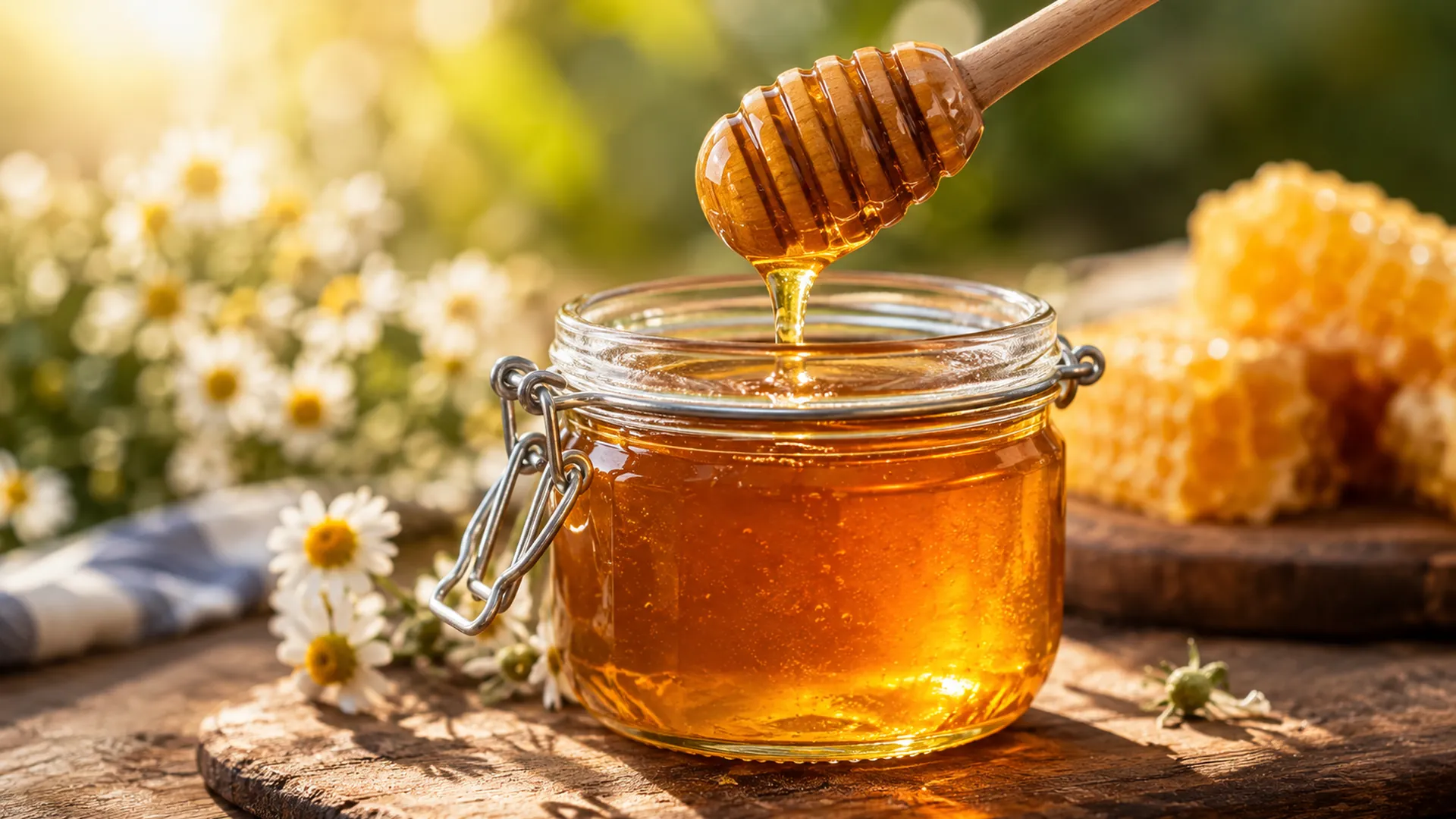
There are foods that go bad if you look at them funny. Then there is honey, which can sit in a cupboard for years and still look perfectly pleased with itself. It has earned a reputation for never spoiling. That reputation is impressive. The word never is doing too much work.
Honey is a terrible place for most microbes
Honey is mostly concentrated sugars with relatively little available water. That matters because microorganisms need usable water to grow. The sugars bind up much of the water, making ripe honey an inhospitable place for many ordinary spoilage organisms. Honey is also naturally acidic. These are practical chemical advantages, not magic.
The Food and Agriculture Organization describes honey as stable against the bacteria and fungi that normally spoil food, provided it is properly stored. A scientific review of honey and microorganisms explains the role of low water activity in limiting microbial growth.
So how can honey actually spoil?
Water is the plot twist. Honey can absorb moisture from humid air, especially if the lid is left open or a wet utensil goes into the jar. With enough moisture, sugar-tolerant yeasts can ferment it. The result can be bubbling, foaming or a sour, alcoholic odor. That is spoiled honey, not a quirky new flavor.
The USDA’s honey inspection instructions explicitly describe checking for fermentation and note that excess moisture is frequently involved. Oregon State University Extension advises discarding honey showing bubbling or sour odors. And honey mixed with fresh ingredients is a different food-safety situation from plain, properly stored honey.
Crystals do not mean the honey has gone bad
Find an old jar with pale, grainy crystals and you may think the honey has turned into sugar gravel. It has, in a sense, but that is normal crystallization. Glucose can separate from the liquid and form crystals without making the honey unsafe. Purdue Extension says crystallized honey is safe and can be gently warmed to restore its pourable texture.
There is one wrinkle: partial crystallization can leave a more watery liquid layer, which may increase fermentation risk under the wrong conditions. The FAO’s honey-processing guidance explains why water distribution matters.
What about honey found in ancient tombs?
The story of supposedly edible honey from ancient Egyptian tombs is irresistible, but claims about a particular jar being safe to eat after thousands of years should not be repeated without documentation and testing. Honey’s chemistry makes exceptional longevity plausible. It does not make every ancient-container anecdote an authenticated food-safety experiment.
How to keep your jar happy
Keep plain honey in a clean, tightly closed container, away from excessive heat and moisture. Use a dry spoon. If it crystallizes, that alone is not a reason to throw it out; if it develops signs of fermentation, discard it. And remember that honey must not be given to infants younger than one year because of infant botulism risk.
Honey may be one of the pantry’s most durable foods, but it is not immortal. For another example of nature stretching the rules, read about the so-called immortal jellyfish. At least honey doesn’t need to reverse its life cycle to stay interesting.