
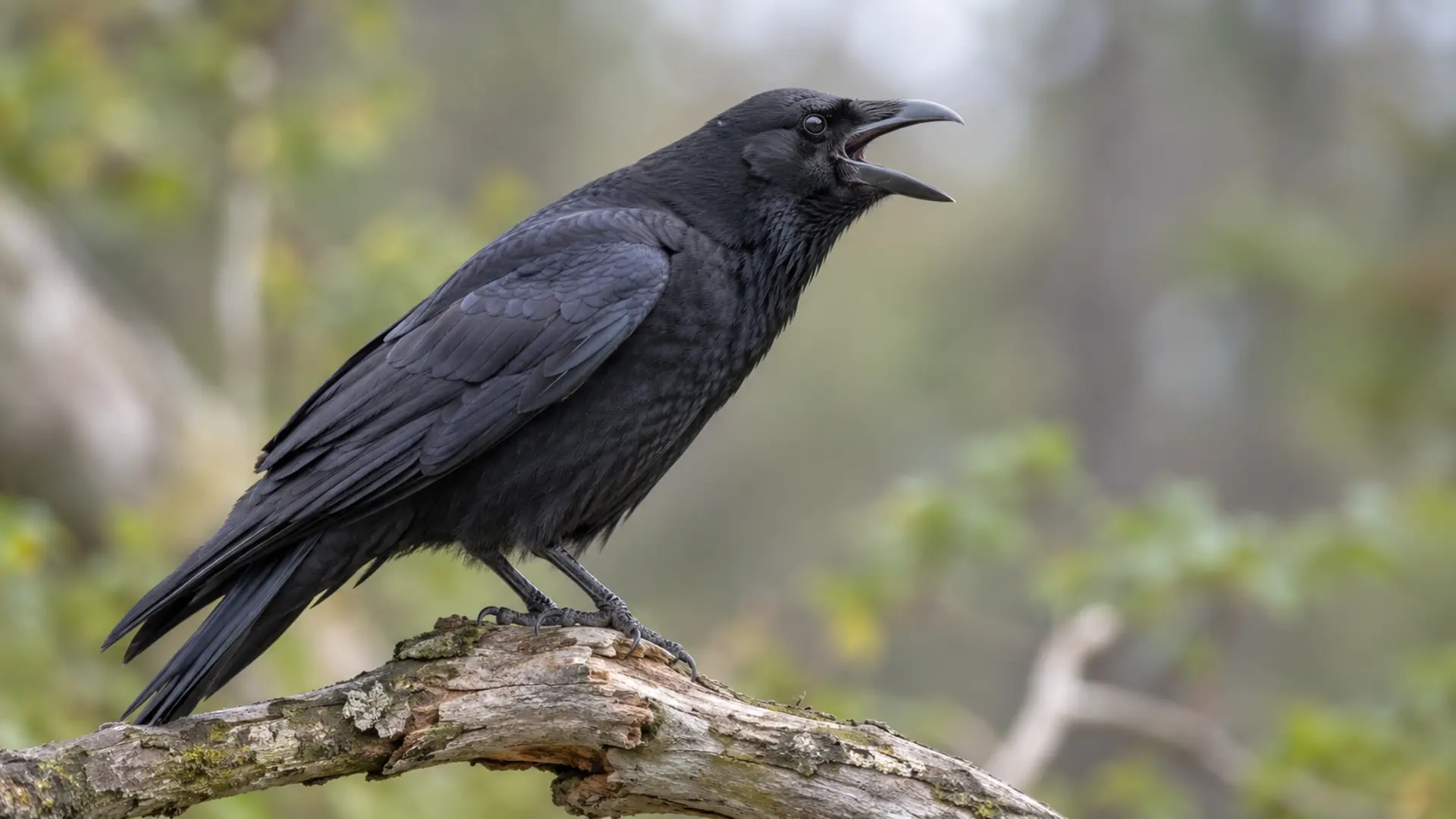
A crow can make plenty of noise without appearing to count anything. In a University of Tübingen experiment, however, three carrion crows learned to produce an exact number of calls—one, two, three or four—after seeing a symbol or hearing a sound.
Each bird then pecked an enter key to show that its sequence was finished. The intriguing part was not only that the number of calls usually matched the cue. Evidence suggested the crows planned the length of the sequence before the first caw came out.
What the crows were asked to do
The researchers worked with three carrion crows, a European species with the scientific name Corvus corone. According to the University of Tübingen’s account of the study, the birds saw selected Arabic numerals or heard particular sounds. Each cue corresponded to a number from one through four.
The crow’s job was to make that many calls and then peck a key to close the answer. A cue for three, for example, required three vocalizations followed by the peck. All three birds learned the task.
That matters because the cue did more than trigger a single learned sound. The birds had to recognize the requested quantity, begin calling, keep track of the sequence and stop at the appropriate point. The peer-reviewed study appeared in Science in May 2024.
The first caw gave away the plan
The birds did not answer immediately. Their delay before the first call grew longer when the cue required more calls. That pattern appeared whether the cue was visual or auditory.
The researchers took the delay as evidence that the crows were forming an abstract numerical idea and preparing the sequence before vocalizing. The sound analysis offered another clue: acoustic features of the first call could predict how many calls the bird was about to make.
In other words, a four-call response did not look like a crow making one sound and deciding three more times whether to continue. The first vocalization already carried information about the planned total.
Even the mistakes had a pattern
The crows were impressive, not flawless. Sometimes a bird produced one call too many or stopped one short. The team interpreted those errors as moments when the crow lost track of the calls already made or still needed.
The acoustic details shifted as a sequence progressed, and those changes helped the scientists identify where an error occurred. That result supports the idea that the birds were monitoring an ordered series rather than simply repeating the same noise until a handler stopped them.
The study’s open research-data record on Zenodo describes the ability as vocal enumeration: voluntarily producing a set number of sounds. It combines numerical judgment with control over the voice.
What “counting” means in this experiment
The quotation marks around “count” are worth keeping. These crows were not saying number words, writing equations or proving that they understand every human idea about numbers. The experiment tested a narrower and still remarkable skill: whether they could connect a cue with a quantity and deliberately produce that many calls.
The finding also fits a broader picture of flexible crow behavior. In a separate line of research, crows learned to recognize threatening human faces and spread that warning to other birds. Counting calls and remembering faces are different abilities, but both show why corvids keep turning up in studies of animal cognition.
A crow that happens to caw four times in a backyard is not necessarily counting. In this controlled task, though, three trained birds repeatedly turned visual and sound cues into planned vocal sequences. The final peck was their way of saying the answer was complete.