
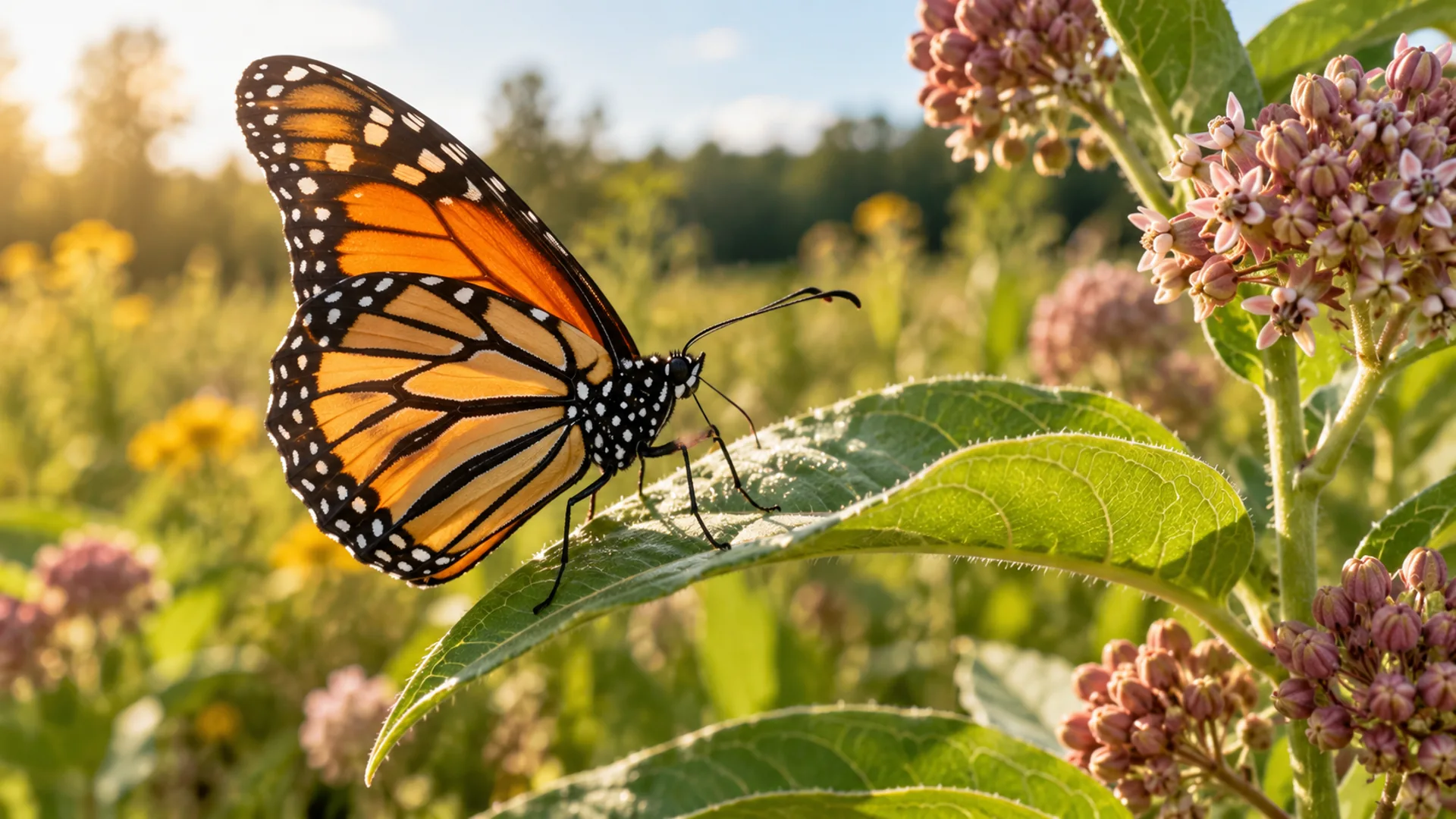
Butterflies taste with their feet. That sounds like an evolutionary prank, but a butterfly landing on a leaf can sample its chemistry before taking a bite—or, in some species, before deciding whether the leaf is suitable for its eggs. Humans generally need to put food in their mouths to learn anything about its flavor. Butterflies can begin their inspection by walking on lunch.
How can butterfly feet taste anything?
The final sections of a butterfly’s legs carry specialized contact chemoreceptors. These sensory structures respond to chemicals on the surface the insect touches. When substances reach the receptors, nerve signals help the butterfly evaluate the plant, flower, mud, or other surface underneath it. In other words, this is genuine chemical sensing—not the animal merely feeling whether a leaf is smooth or rough.
Washington State University entomologist Rich Zack explained in a July 2026 Ask Dr. Universe article that a butterfly can walk across a leaf and receive an initial chemical assessment without eating it. The university also describes how receptors convert contact with certain molecules into electrical signals that travel through the insect’s nervous system. Butterflies do not have tiny tongues tucked into their shoes. They have a different arrangement of sensory equipment.
A taste test can decide where caterpillars grow up
Food selection is only half the story. For many butterflies, choosing a plant on which to lay eggs matters enormously. A caterpillar may eat only a limited group of host plants. A female that deposits an egg on the wrong leaf could leave her offspring with a terrible start—or no viable meal at all.
Female butterflies of some species tap plants with their feet to check chemical signals associated with suitable host plants. Those signals can help determine whether an egg-laying site is appropriate. A monarch butterfly, for example, is closely associated with milkweed because its caterpillars feed on milkweed species. The important point is not that every butterfly follows exactly the same routine, but that contact chemoreception can make plant choice less of a gamble.
Smithsonian educational notes describe butterflies detecting information about a leaf using their feet before laying eggs. This is a remarkably practical trick: the adult gathers information that matters to an offspring it may never see again.
Why butterflies sometimes land on people
If a butterfly has ever settled on your arm, it was not necessarily admiring your personality. Some butterflies seek salts and other dissolved minerals. Sweat can provide chemical cues, and butterflies sometimes gather on wet soil or mud in a behavior commonly called puddling. Washington State University notes that some butterflies investigate sweat and even tears or carrion for nutrients.
That does not mean every butterfly that lands on someone is trying to drink sweat. Insects land for all sorts of reasons. But it is a reminder that a human arm is, to certain wildlife, a surface worth sampling. Congratulations: you might be a mineral station.
Do butterflies still drink through a proboscis?
Yes. Their feet help detect chemicals; they are not drinking straws. Many butterflies obtain nectar and other liquids using a long, flexible proboscis that usually rests coiled when not in use. Taste receptors on the legs and the feeding apparatus can work as parts of a larger sensory system. One helps evaluate the landing site; the other helps obtain a meal.
Butterflies also use their antennae to detect airborne chemical cues. So the familiar picture of an insect simply spotting a flower and sipping nectar leaves out quite a bit of sensory work.
The strange logic of feet that taste
What looks absurd to us solves a real problem for a small animal constantly choosing where to land, feed, and leave its young. Butterflies do not experience flavor exactly as people do, and scientists should not pretend to know what sugar or milkweed “tastes like” to one. They can, however, measure the sensory response and observe the resulting behavior.
For more animal sensory oddities, see how crows recognize human faces. Butterflies have their own version of doing homework before making a decision: they put a foot down and ask the leaf a question.