
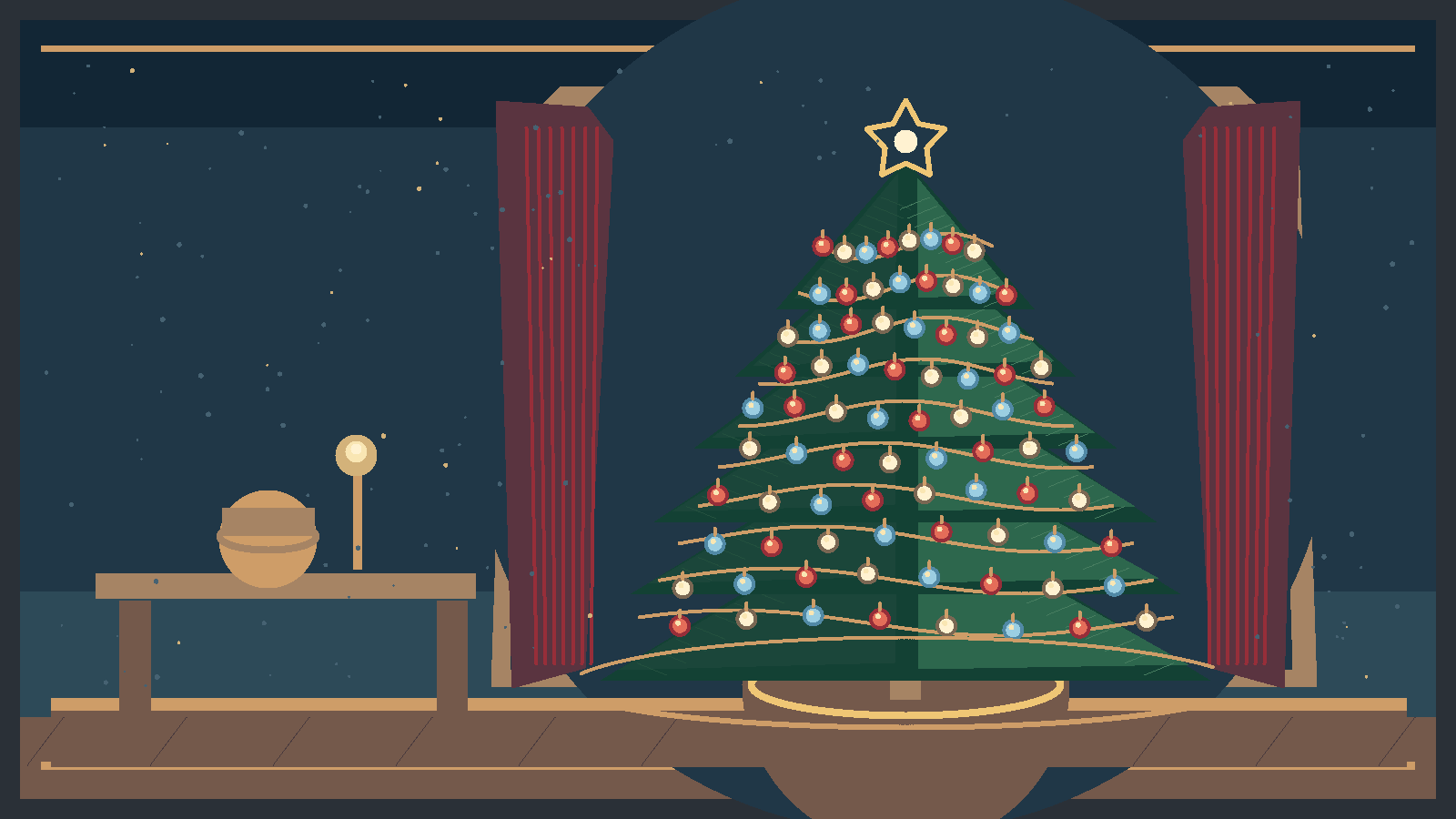
The first electric Christmas tree lights weren’t an easy box of tangled wires somebody bought at the store. In 1882, a man named Edward H. Johnson hand-wired 80 red, white and blue light bulbs around a Christmas tree in his New York home. Then he made the entire tree revolve. Apparently, simply making a tree glow wasn’t quite ambitious enough.
It was an early glimpse of the holiday spectacle we recognize today, though it would take decades for electric tree lights to become affordable, common and less intimidating than the candles they replaced.
Edison displayed lights outdoors. Johnson lit the tree.
Thomas Edison deserves a place in this story, but the two milestones are not the same. During the 1880 holiday season, Edison displayed strings of electric lights outside his Menlo Park laboratory in New Jersey. People riding past on trains could see the unusual illumination.
Two years later Johnson, an Edison business associate, brought the technology indoors and arranged colored bulbs on an actual Christmas tree. The Library of Congress’s history of electric Christmas lights distinguishes Edison’s 1880 outdoor display from Johnson’s 1882 tree. That distinction gets lost when both men are squeezed into a single sentence about who “invented Christmas lights.”
Eighty bulbs and a rotating tree
Johnson wired together 80 little lamps in red, white and blue and wrapped them around the branches. The tree itself turned, changing how the colors appeared as it moved. A Library of Congress account documents the display and calls it the first string made for a Christmas tree.
The moving parts were surprisingly elaborate for a living room. In a December 1882 Detroit Post and Tribune eyewitness account, reporter William Augustus Croffut described the tree turning about six times per minute as groups of colored bulbs went dark and lit up again. He reported electric current arriving on a wire from Edison’s main office and a concealed electrically driven crank beneath the floor. Croffut also counted 28 small lamps strung across the ceiling, separate from the 80 on the revolving tree. This was more than a few decorative bulbs. It was a miniature mechanical light show, assembled before plug-in holiday light sets existed.
Think about how much has changed. Today you can buy a light strand, plug it in, and spend the rest of the afternoon asking why half of it doesn’t work. Johnson had to assemble the electrical display himself in an era when even the idea of household electric lighting was novel.
Before electricity, families frequently lit trees with candles. The effect was beautiful, but open flames beside drying branches were an obvious fire hazard. Electric bulbs offered a different possibility, though early electrical installations had their own cost and safety concerns.
Why didn’t everybody copy it?
Electricity was not yet a standard feature in American homes. Electric lights required wiring, technical knowledge and money. People were also understandably wary of unfamiliar electrical equipment. Johnson’s tree was an impressive demonstration, not the beginning of a same-day nationwide decorating craze.
By 1895, President Grover Cleveland had hundreds of multicolored bulbs put on the White House family Christmas tree, an endorsement of the idea at a highly visible address. The Library of Congress notes that General Electric began offering preassembled Christmas light kits in 1903. Kits helped, but electric tree lights still weren’t automatically within every family’s reach.
Then somebody figured out how to sell the glow
In 1917, teenager Albert Sadacca, whose family worked in novelty lighting, recognized an opportunity to sell colored Christmas lights. By the 1920s, he and his brothers helped organize the National Outfit Manufacturers Association, or NOMA, which grew into a major name in decorative lighting. The Library of Congress’s business-history account credits Sadacca with helping turn the early technical novelty into a commercial tradition.
That story has three different kinds of ingenuity: Edison showed what a glowing outdoor display could do, Johnson turned it into a tree decoration, and later businesses worked out how to make and sell it to more people. Nobody had to invent Christmas itself. They had to solve the considerably more practical problem of putting lights on a tree.
The White House lawn joined the show in 1923
Public tree lighting grew into its own tradition. In November 1923, First Lady Grace Coolidge allowed District of Columbia public schools to put a Christmas tree on the Ellipse in Washington. That Christmas Eve, President Calvin Coolidge pressed the button to light the first National Christmas Tree before about 3,000 spectators. The National Park Service’s official history identifies it as a 48-foot balsam fir donated by Middlebury College in Vermont. The park’s visitor history records 2,500 red, white and green electric bulbs on that tree—a striking contrast with Johnson’s original 80. This public ceremony was a separate milestone from Johnson’s 1882 indoor display, not a rival claim to the first electrically lit Christmas tree.
We now see electric lights wrapped around houses, storefronts and trees without giving the wiring much thought. But an 80-bulb revolving tree in 1882 must have seemed like a glimpse of the future. If you’re more interested in the imagery that later came with Christmas, BiggleBit has also looked at why the little red truck carrying a tree seems to be everywhere.
Johnson’s tree lit up. It spun. And it helped point the way toward a holiday tradition that would eventually give people two new annual rituals: decorating, and trying to find the one bad bulb.