
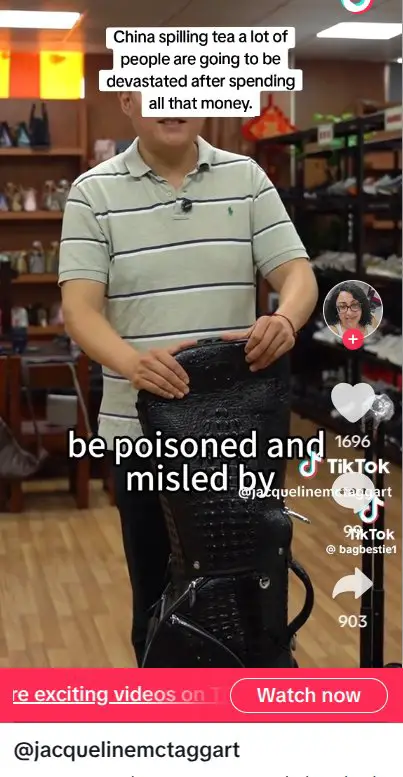
The short answer: In April 2025, a wave of viral videos from supposed Chinese manufacturers claimed they made products for major luxury and apparel brands and could sell the “same” goods directly for a fraction of the price. The videos were real. The sweeping claims were not proven.

TikTok Turned a Trade Fight Into Factory Theater
The videos took off during a period of escalating U.S.-China tariffs in 2025. Creators claiming to represent Chinese factories told American viewers that the expensive handbags, leggings and other branded goods they bought were secretly coming from the same factories now offering bargain versions directly.
It was perfect TikTok material: huge brands, giant markups, international trade policy and somebody standing in a factory saying the entire system is a scam.
That does not make it true. It makes it extremely good TikTok.
No, There Is No Good Evidence That 80% of Luxury Bags Are Made in China
One of the biggest viral claims said more than 80% of luxury handbags were made in China and merely finished, branded or repackaged in Europe.
Factchequeado found no evidence linking the supposed factories in those videos to the brands they named. Other reporting found the same basic problem: a person on TikTok saying “we make these” is not supply-chain documentation.
Luxury supply chains can absolutely involve multiple countries, subcontractors, materials suppliers and component makers. That is different from proving that an authentic Hermès bag and a cheap marketplace bag rolled off the same production line.
Lululemon Does Use Suppliers in China. That Still Does Not Prove the Viral Claims.
This is where the story gets more interesting than a simple “fake” label. Lululemon’s own 2025 supplier disclosure lists manufacturing and supplier facilities in China.
But that does not mean a random seller offering $5 leggings is selling authentic Lululemon product from an approved factory. The brand’s real supplier network existing in China is evidence of a global supply chain, not proof that every viral seller has found the secret back door to it.
In other words: China makes a lot of things. This is not breaking news. The leap from “China is part of the supply chain” to “this $6 item is literally the same branded product” is where the evidence falls apart.
The “Buy the Same Luxury Item Direct” Pitch Is the Part to Treat Carefully
Forbes reported that experts warned many of the heavily discounted items promoted through these videos were likely counterfeits rather than authentic branded goods available through some magical factory-direct loophole.
That is a much less exciting answer than “the factories exposed the luxury industry.” It is also the answer that fits the available evidence.
The old version of this story repeated claims that consumers could get the same Hermès, Lululemon and other branded products from the same factories for a tiny fraction of retail price. I cannot verify that, so I am not leaving it in as fact.
What the Viral Videos Actually Exposed
The useful part of the whole episode was not a secret list of authentic luxury factories. It was the reminder that brand value, manufacturing cost, supply-chain complexity and retail price are not the same thing.
Luxury brands sell design, marketing, distribution, scarcity, service, intellectual property and status along with the physical object. You can think the markup is absurd without pretending every cheap lookalike is the authentic item minus a logo.
One commenter on the original viral cycle joked, “The Chinese just said ‘well, since ya wanna be real.’” Another compared starting a trade fight with a manufacturing partner to yelling at someone who handles your food.
Funny lines. Not evidence.
That is really the whole story: TikTok found a complicated global-supply-chain question, compressed it into 30 seconds, added a Birkin, and somehow made customs policy entertaining.