
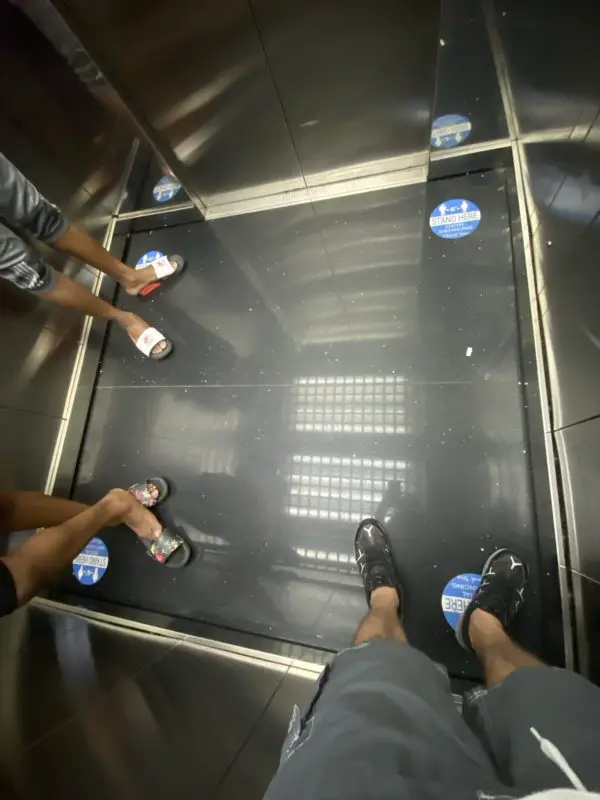
The short answer: Yes, researchers really study elevator behavior. But the science is stranger — and less tidy — than “everybody stands in a corner.” A classic 1983 study focused on how strangers manage eye contact. More recent smart-elevator research found that people riding alone often preferred the middle of the cabin.

Scientists Really Did Study People in Elevators
Somebody looked at an elevator — a metal box where strangers silently stare at illuminated numbers — and thought: this deserves peer review.
They were correct.
In 1983, researchers Miron Zuckerman, Marianne Miserandino and Frank Bernieri published Civil Inattention Exists—in Elevators.
The 1983 Study Was About Eye Contact, Not the Four Corners
The study used elevators to examine “civil inattention,” the social habit of briefly acknowledging a stranger and then politely withdrawing attention.
About half of the solo riders in one part of the research gave the other person a brief visual acknowledgment and then avoided further eye contact.
Which is scientific language for the elevator experience most of us already know: “I recognize that you are a human being. I will now become intensely interested in the number 7.”
What About Where People Actually Stand?
That has been studied too, but the results do not support a universal “corners always win” rule.
Research using a smart-elevator system at Tallinn University of Technology in Estonia tracked real passenger locations and movement inside an elevator cabin.
The published analysis found that people riding alone most often favored the middle of the cabin. When multiple people were aboard, riders spread out and kept more distance from one another.
So much for my beautiful theory that humanity instinctively scurries to elevator corners like nervous furniture.
The Study Was in Estonia, Not Latvia
An earlier version of this article placed the smart-elevator research in Latvia.
The research platform was at TalTech in Tallinn, Estonia.
That is not a tiny technical distinction if your entire paragraph begins with “researchers in Latvia.”
Elevator Etiquette Is Real. It Just Is Not a Geometry Law
People clearly manage distance, eye contact and personal space when sharing an elevator. The interesting part is that the behavior changes with occupancy and context.
There is no magical four-corner constitution secretly installed with the elevator cables.
If you are alone, the middle may actually be the popular choice. If strangers pile in, everybody starts negotiating space without saying a word.
And the moment a fifth person enters, we all suddenly discover something fascinating on our phones.